
- Fox ESS EP6 and EP12 Overview
- Key Specifications at a Glance
- EP6 vs EP12 Comparison
- How to Choose the Right Size
- Inverter Compatibility and System Sizing
- Battery Warming and Cold Weather Performance
- External Insulation Without Voiding Your Warranty
- Mounting, Scalability and the Junction Box
- FAQs
- What Installers Are Asking About the EP Batteries
Fox ESS EP6 and EP12 Overview
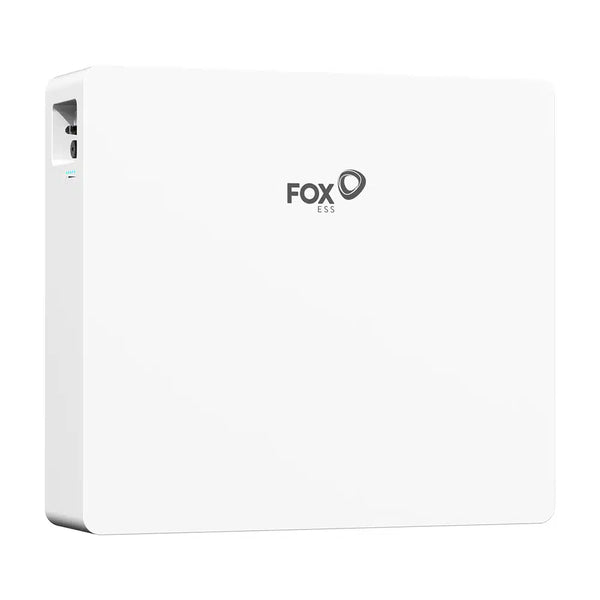
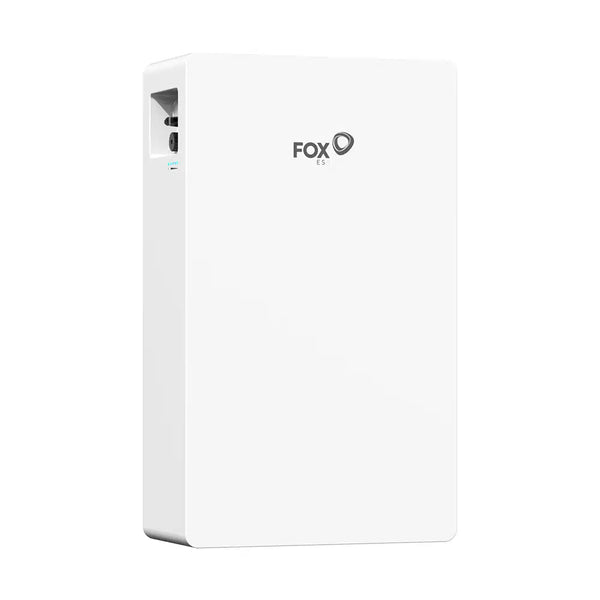
The Fox ESS EP6 and EP12 are high-voltage lithium iron phosphate (LFP) battery modules designed for residential and small commercial energy storage. The EP6 provides 5.76 kWh of nominal capacity in a compact unit, while the EP12 offers 11.52 kWh in a larger enclosure. Both batteries are compatible with a wide range of Fox ESS hybrid inverters, including the H1, KH, H3, H3-Pro and US series, and can be wall or floor mounted indoors or outdoors with an IP65 rating.
Both models feature built-in battery warming, built-in fire suppression, and can be expanded by connecting up to four units in parallel using the Fox ESS junction box. The EP6 scales to a maximum of 23.04 kWh and the EP12 to 46.08 kWh. This guide compares the two side by side to help you decide which fits the job.

EP6 and EP12 Quick Specs
| Battery Chemistry | LFP (LiFePO₄) | |
| EP6-H | EP12-H | |
| Nominal Energy | 5.76 kWh | 11.52 kWh |
| Nominal Voltage | 192 V | 384 V |
| Operating Voltage | 174 to 219 V | 348 to 438 V |
| Dimensions (W x H x D) | 380 x 640 x 185 mm | 710 x 640 x 185 mm |
| Weight | 51 kg | 98 kg |
| Max Scalability | 23.04 kWh (4 units) | 46.08 kWh (4 units) |
Both models share: 30 A max charge/discharge current, 15 A recommended charge, 65 A peak discharge (60 s), 36 A peak charge (5 s), ≥95% round-trip efficiency, 90% depth of discharge, IP65, CAN communication, operating range of -25 to 55 °C, and certification to IEC62619, UN38.3 and EN IEC 61000-6-1/2/3/4.
Fox ESS EP6 vs EP12: What Actually Differs?
Electrically, the EP6 and EP12 are very similar. They share the same charge and discharge current ratings, the same 90% depth of discharge, the same ≥95% round-trip efficiency, and the same IP65 enclosure rating. Both can operate from -25 °C to 55 °C for charging and discharging. The meaningful differences come down to capacity, physical size and voltage.
| Specification | EP6-H | EP12-H |
|---|---|---|
| Nominal Energy | 5.76 kWh | 11.52 kWh |
| Nominal Voltage | 192 V | 384 V |
| Operating Voltage Range | 174 to 219 V | 348 to 438 V |
| Width | 380 mm | 710 mm |
| Weight | 51 kg | 98 kg |
| Max System Capacity (4 units) | 23.04 kWh | 46.08 kWh |
The EP12 is essentially double the EP6 in capacity, voltage and width, but shares the same 640 mm height and 185 mm depth. At 98 kg, the EP12 is a two-person lift for wall mounting. The EP6 at 51 kg is more manageable for a single installer, though wall mounting any battery at this weight still benefits from two pairs of hands.

How to Choose Between the EP6 and EP12
The right choice depends on the total storage capacity the system needs, the available wall or floor space, and whether future expansion is likely.
For a typical three to four bedroom UK home with a 4 to 6 kW solar array, a single EP12 provides enough storage to cover most overnight consumption. A single EP6 suits smaller properties, or jobs where the customer wants to start modestly and add a second unit later. Both batteries support up to four units in parallel through the Fox ESS junction box, so either model can grow with the household's needs.
One important rule to note: EP5/EP6 units cannot be mixed with EP11/EP12 units in the same system. If a customer starts with an EP6, future expansion must also use EP6 modules. The same applies to EP12 systems. Fox ESS has confirmed this restriction in their technical documentation.

Which Fox ESS Inverters Work With the EP Batteries?
Both the EP6 and EP12 are compatible with all current Fox ESS hybrid inverter series: the H1, KH, H3, H3-Pro and US models. According to the Fox ESS battery sizing guide, the EP5/6 and EP11/12 support between 1 and 4 battery modules with the H1/AC1, KH/KA, H3/AC3 and H3 Smart inverters, and between 1 and 8 modules with the H3 Pro.
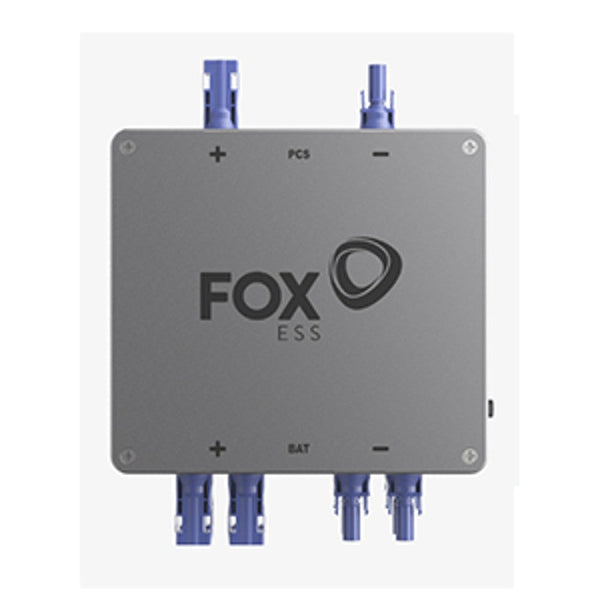
When installing more than one EP battery module, a junction box (FE-JUNBOX-HV) is required to manage the parallel connection. The junction box supports up to four batteries, is IP65 rated, and is straightforward to install.
Always confirm final specs against the latest manufacturer datasheet before design sign off. The Fox ESS battery sizing guide is available to download from the DECO Group product pages.
Battery Warming and Cold Weather Performance
Both the EP6 and EP12 include a built-in smart battery warming function. This is particularly relevant for UK installations where batteries are often mounted in garages or on external walls, and winter temperatures regularly drop below the optimal operating range for lithium cells.
The warming system uses either solar power or grid power to bring the battery cells up to a safe operating temperature before charging or discharging begins. This protects the cells from damage and maintains performance during cold spells.
Something to be aware of: the warming function needs to be manually enabled in the inverter settings. Navigate to the quick settings menu on the inverter or Fox ESS cloud portal and enable the warm-up option. If the setting is not visible or appears greyed out, Fox ESS technical support can remotely upgrade the system firmware to make it available. This is a common support call during the winter months, so it is worth enabling the feature at commissioning rather than waiting for the first cold snap.

External Insulation Without Voiding Your Warranty
For batteries installed in particularly exposed locations, Fox ESS has published guidance on adding external insulation materials. Crucially, if the guidelines are followed exactly, the product warranty remains unaffected. This is worth knowing, because many installers assume any modification to the battery enclosure will void coverage.
What Materials Are Acceptable?
Fox ESS requires any insulation to meet all of the following: Class A or equivalent flame retardancy rating (UL 94 V-0 or BS EN 13501-1 Class A1/A2), thermal conductivity of 0.040 W/(m·K) or lower, a long-term operational temperature range of at least -40 °C to +120 °C, and full RoHS/REACH compliance. The material must also provide electrical insulation and maintain structural integrity under vibration and thermal cycling.
Recommended options include ceramic fibre blanket, flame-retardant closed-cell rubber foam, rock wool and flame-retardant polyurethane foam. Standard EPS, XPS or non-rated polyethylene foam is prohibited. Metallic foil layers such as aluminium foil are also prohibited unless reliably insulated from all electrical components.
Installation Rules
Insulation must be applied to the external surface of the battery enclosure only. Do not cover ventilation openings, cooling channels, heating elements, BMS temperature sensors or voltage taps. Maintain a minimum 50 mm clearance from high-voltage connectors, busbars and fuses. Fixation methods must not pierce the enclosure, and insulation must be removable for maintenance.
Fox ESS is clear that external insulation slows heat loss during idle periods but is not a substitute for the active warming function. If core cell temperature is below the system threshold, power may still be limited regardless of insulation. The full external insulation guidance document is available to download from the DECO Group site.
Mounting, Scalability and the Junction Box
Both the EP6 and EP12 can be floor or wall mounted. The EP6 at 380 mm wide and 51 kg is the easier unit to handle on site. The EP12 at 710 mm wide and 98 kg will need two people for wall mounting and appropriate wall fixings for the substrate. Both units are 640 mm tall and 185 mm deep.
For multi-battery systems, the Fox ESS junction box (model FE-JUNBOX-HV) is required. It supports up to four EP batteries in parallel and carries the same IP65 rating, so it can be installed alongside the batteries in outdoor or semi-exposed locations. The junction box itself is a compact, straightforward addition to the installation.
With four EP12 units and a junction box, a system can reach 46.08 kWh of total storage. With four EP6 units, the ceiling is 23.04 kWh. For larger residential or small commercial projects that need capacity beyond what four units can deliver, consider the Fox ESS ECS or HV2600 battery ranges which support higher stack counts.
Frequently Asked Questions
Can you mix EP6 and EP12 batteries in the same system?
Fox ESS does not support mixing EP5/EP6 battery modules with EP11/EP12 modules in the same installation. All parallel-connected batteries in a system must be the same type. A system that starts with EP6 units must expand with additional EP6 units only.
Do the EP6 and EP12 need a junction box?
A junction box (model FE-JUNBOX-HV) is required when installing more than one EP battery module in parallel. A single EP6 or EP12 connected to a compatible Fox ESS inverter does not require a junction box.
What is the operating temperature range for the Fox ESS EP batteries?
The Fox ESS EP6 and EP12 batteries can charge and discharge across a temperature range of -25 °C to 55 °C. Both models include a built-in battery warming function that should be enabled in the inverter settings to maintain performance during cold weather.
Will adding external insulation to an EP battery void the warranty?
Fox ESS has confirmed that adding external insulation will not void the product warranty, provided the materials and installation method comply fully with their published insulation guidance document. Any deviation from those requirements that causes damage or a safety incident will void the warranty.
How many EP batteries can be connected in parallel?
Up to four EP6 or four EP12 battery modules can be connected in parallel using the Fox ESS junction box, providing maximum system capacities of 23.04 kWh and 46.08 kWh respectively. The H3 Pro inverter supports up to eight EP modules through additional junction boxes.
What Installers Are Asking About the EP Batteries
Battery temperature too low warnings in winter
Some installers have found that EP batteries show "battery temperature too low" warnings during cold weather, preventing the system from charging or discharging. In most cases this is resolved by enabling the smart battery warming function in the inverter's quick settings menu. The warming feature uses solar or grid power to bring cells up to operating temperature. If the option is not visible or is greyed out, contacting Fox ESS support to request a remote firmware update will usually resolve it.
Confusion about mixing EP5/EP6 with EP11/EP12
Some installers have asked whether an existing EP6 system can be expanded by adding an EP12 module. Fox ESS has confirmed this is not supported. EP5/EP6 and EP11/EP12 use different voltage architectures and cannot be combined. Planning the right module size at initial install avoids this limitation later.
Always confirm final specs against the latest manufacturer datasheet before design sign off.
Fox ESS EP Batteries from DECO Group
About DECO Group
DECO Group is a UK wholesale battery and solar supplier based in South London, serving MCS-accredited installers and electrical contractors across the country. We stock Fox ESS batteries, inverters and accessories alongside a full range of solar panels, mounting systems and balance-of-system components. Trade account holders benefit from dedicated pricing and support.
Call us: 03335 777488